
Emulsion comparison
EMS-4000 vs EMS-5100: choosing a silicone emulsion
Compare technical-grade EMS-4000 and EMS-5100 emulsions for gloss, water repellency, mold release and textile lubrication, with 350 and 1,000 cSt bases.
At a glance
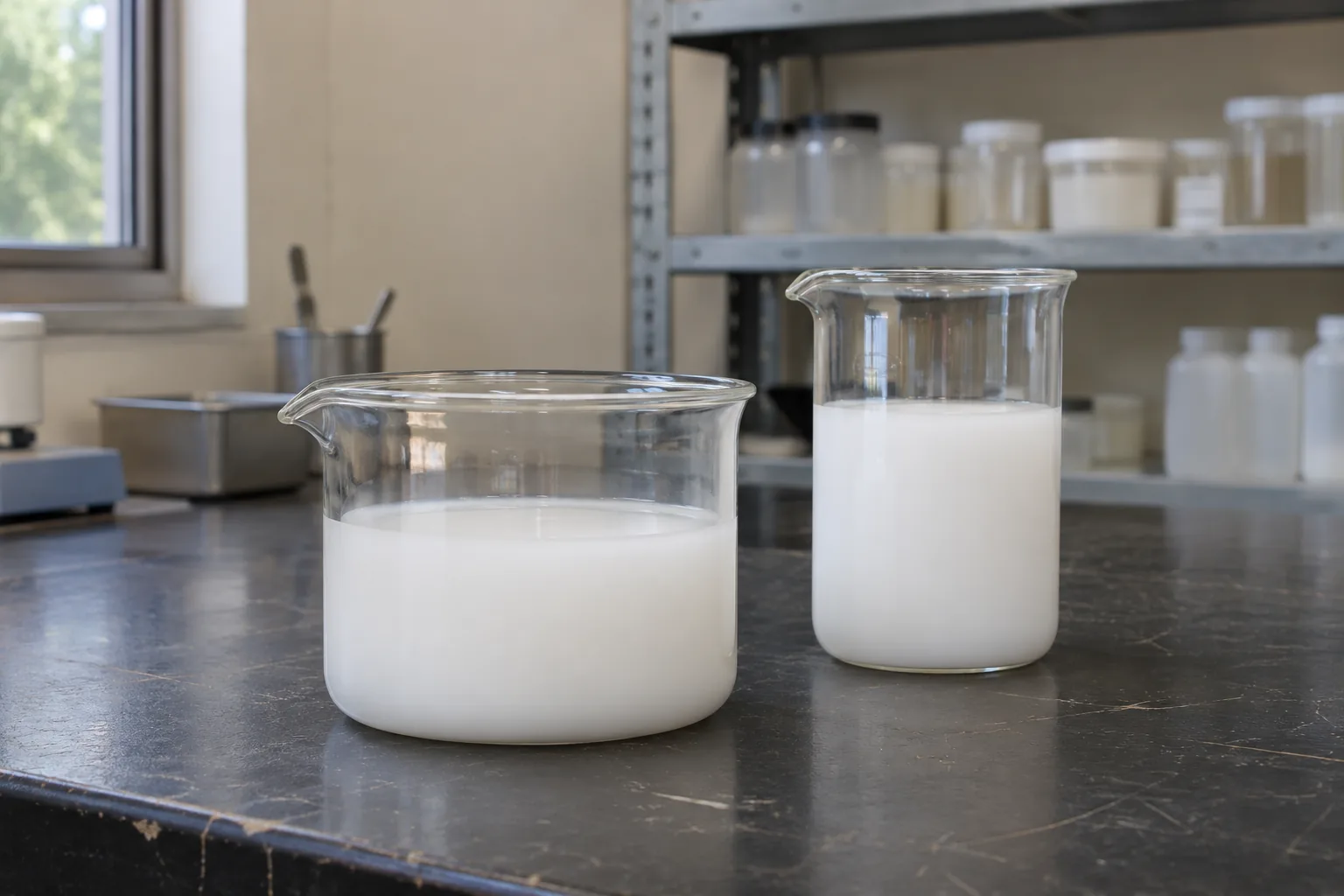
Choose between technical-grade SILCULAR™ EMS-4000 and EMS-5100 around the gloss, water repellency, release or lubrication your formulation needs. Both are 60% active, nonionic, water-based silicone emulsions. EMS-4000 uses a 350 cSt PDMS base fluid and EMS-5100 a 1,000 cSt base fluid; these values describe the silicone ingredient, not the supplied emulsion viscosity.
How do the published properties compare?
| Property | EMS-4000 | EMS-5100 |
|---|---|---|
| Active content | 60% | 60% |
| Base-fluid viscosity | 350 cSt | 1,000 cSt |
| Emulsion type | Nonionic | Nonionic |
| Appearance | White | White |
| pH | 5–9 | 5–9 |
Use the current product documentation to confirm test conditions and the specification applicable to your order. Do not use the base-fluid viscosity as a pump-sizing value for the supplied emulsion.
Which applications should you evaluate?
Both emulsions are offered for automotive and furniture dressings, rubber and plastic mold release, and textile lubrication. Compare the finished surface and process result: gloss, water repellency, application uniformity, release consistency or textile handling, using the same substrate and application conditions.
EMS-5100’s higher base-fluid viscosity does not establish that it will perform better in every formulation. Likewise, matching active content does not mean the two products are interchangeable. Compare them in the actual substrate and formulation system you intend to use.
EMS-4000 can also be used in offset-printing applications. For this use, discuss the press, substrate, working formulation, application point and required result with ECO USA, and evaluate EMS-4000 in the intended process.
How can you run a useful comparison?
Prepare a written trial plan before comparing samples. Keep the substrate, preparation method, application equipment, quantity applied and evaluation timing consistent. Record the product and lot for each trial.
- For care formulations, define the desired gloss, feel and uniformity, then check the finished surface against those targets.
- For mold release, record release consistency and inspect the part and mold surface. Include any later painting or bonding requirements in your evaluation.
- For textiles, assess the processing result and finished material against your own acceptance limits.
If dilution or incorporation into another formulation is planned, request guidance for that specific system. A common active content is not a universal dilution instruction.
What information helps ECO USA recommend a trial?
Share your application, substrate, current formulation, processing method, target appearance or performance, estimated consumption and any restrictions. Tell us whether you want to compare both emulsions or qualify a replacement for an existing material.
Does 1,000 cSt describe the supplied EMS-5100 emulsion? No. It is the base-fluid viscosity. Request the relevant handling information for the supplied emulsion separately.
Where are the SDS and TDS? Emulsion documentation is available from ECO USA on request. Ask for the current documents before planning your qualification trial.
Sources & product documents
Products in this guide
Product knowledge
Related guides
Application testing
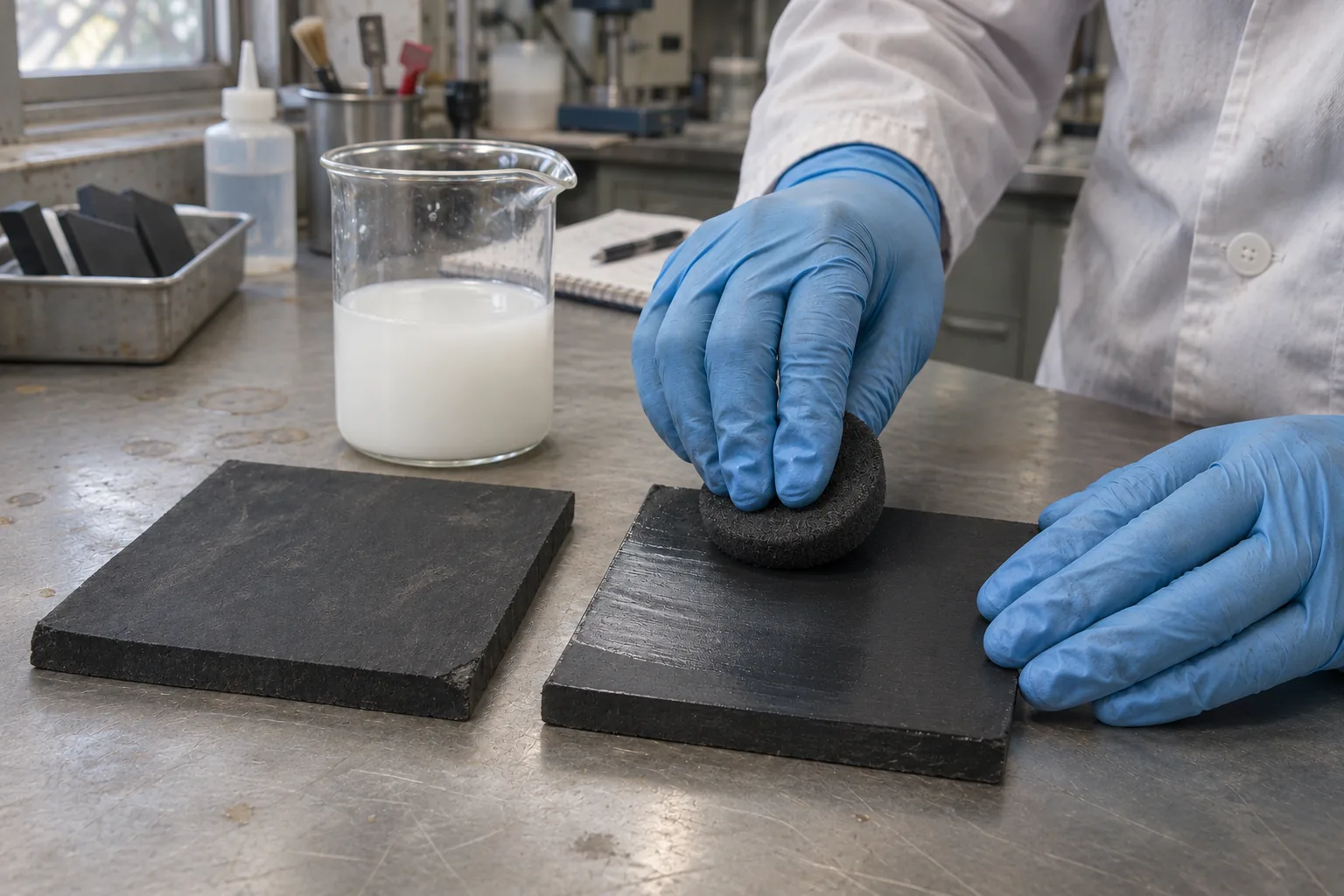
Planning a silicone emulsion application trial
Test technical-grade silicone emulsions for gloss, release and textile lubrication. Compare application uniformity, consumption and finished-product results.
2 min readRead guide

Technical documentation
SDS vs TDS: documents for silicone product qualification
Use SDS and TDS documents to evaluate technical-grade silicone products. Review application performance, test conditions, handling and purchasing requirements.
2 min readRead guide
Fluid vs emulsion
Silicone oil vs silicone emulsion: which should you specify?
Compare technical-grade PDMS oil and water-based silicone emulsions for release, lubrication and surface-care formulations. Select by process and performance.
3 min readRead guide