
Application testing
Planning a silicone emulsion application trial
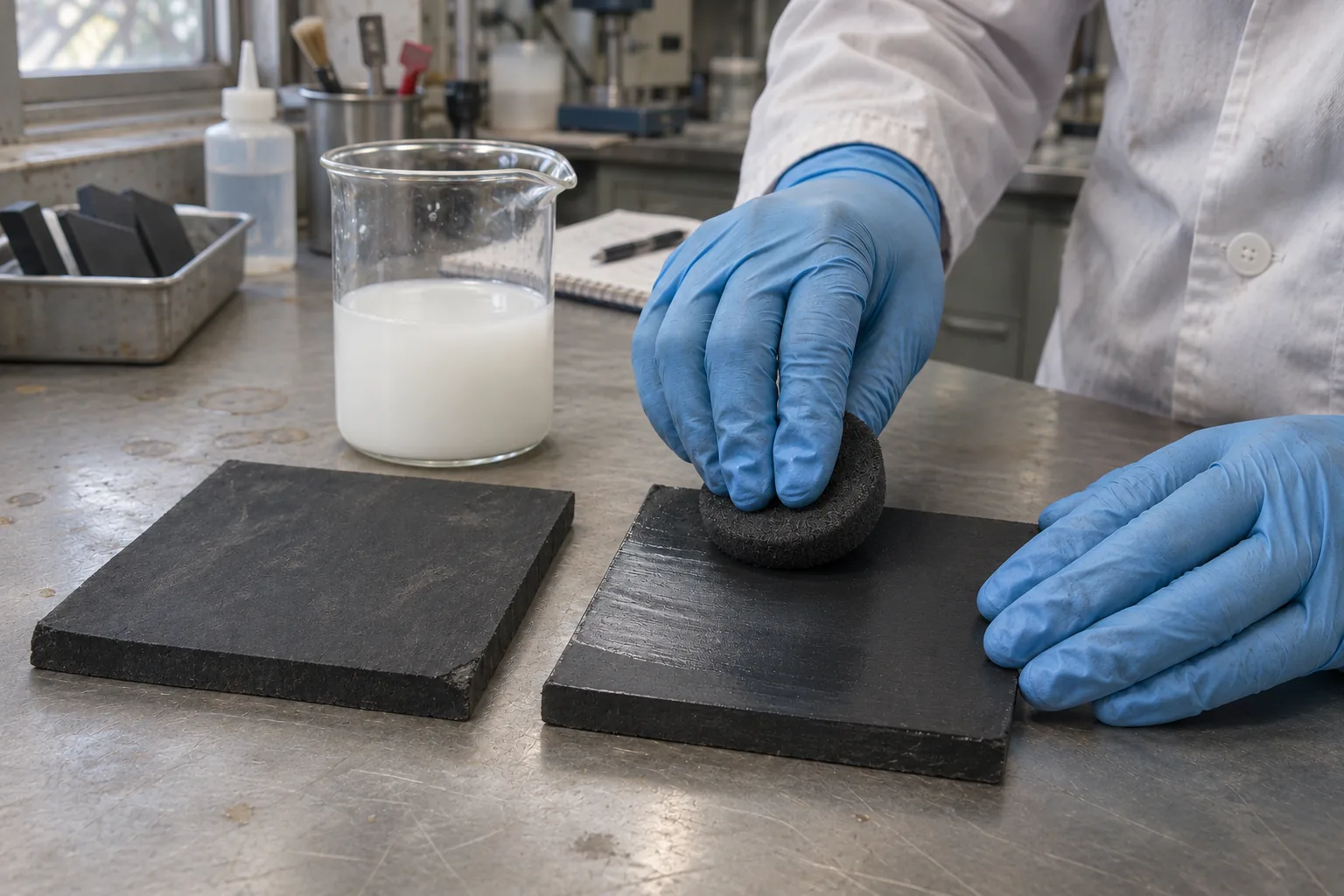
Test technical-grade silicone emulsions for gloss, release and textile lubrication. Compare application uniformity, consumption and finished-product results.
At a glance
Plan trials of technical-grade SILCULAR™ EMS-4000 or EMS-5100 around a specific application result: dressing gloss, mold release consistency or textile lubrication. Define the substrate, target performance and application method, then compare finished formulations under controlled conditions. Confirm working concentration and handling guidance with ECO USA before scaling up.
Start with the application brief
Start with the application result your product must deliver: a target dressing finish, consistent demolding or the required yarn and thread processing behavior. Identify the surface or material, application quantity, evaluation interval and measurable acceptance criteria so the trial connects formulation choices to performance.
Record the existing material and process as your reference. Include any requirements for subsequent coating, printing, bonding, cleaning or finishing. A trial that looks acceptable immediately after application may still need evaluation at the next production step.
Control the variables that can change the result
- Material: record the emulsion, lot and current product-document revision.
- Formulation: record all ingredients and the order of addition used in the trial.
- Application: keep the substrate preparation, equipment settings and amount applied consistent.
- Conditions: record temperature, timing and other process conditions relevant to your evaluation.
- Assessment: use the same method and acceptance limits for every sample.
When evaluating EMS-4000 against EMS-5100, remember that both are 60% active emulsions, while their PDMS base-fluid viscosities differ. Change one planned variable at a time so the comparison remains interpretable.
Is there a standard dilution ratio?
This guide does not specify a universal dilution ratio. The working concentration must suit the formulation and application, and should follow the current product guidance. Ask ECO USA about the proposed dilution water, mixing method and compatibility with the other ingredients in your system.
During a small trial, record appearance, uniformity and any visible separation, along with the time between preparation and use. Define how long the working formulation must remain usable in your own process, then assess it over that interval.
Use an application-specific scorecard
| Application | What to record |
|---|---|
| Automotive or furniture care | Appearance, uniformity, feel and the required finish after application |
| Mold release | Release consistency, part appearance, surface residue and downstream finishing results |
| Textile lubrication | Processing behavior, material handling and finished-material acceptance results |
| Offset printing with EMS-4000 | Press and substrate, application point, working formulation and results against the defined process requirements |
Set your own pass/fail limits before reviewing results. Retain a reference sample or photograph where useful, and record any deviations from the plan.
Move from sample to a production specification
Share the trial results and any unresolved issues with ECO USA. Before a larger trial, confirm the selected product, documentation, quantity and supply requirements. Keep the approved application procedure and acceptance criteria with your material specification so future evaluations use the same basis.
Sources & product documents
Products in this guide
Product knowledge
Related guides
Emulsion comparison
EMS-4000 vs EMS-5100: choosing a silicone emulsion
Compare technical-grade EMS-4000 and EMS-5100 emulsions for gloss, water repellency, mold release and textile lubrication, with 350 and 1,000 cSt bases.
2 min readRead guide

Technical documentation
SDS vs TDS: documents for silicone product qualification
Use SDS and TDS documents to evaluate technical-grade silicone products. Review application performance, test conditions, handling and purchasing requirements.
2 min readRead guide
Fluid vs emulsion
Silicone oil vs silicone emulsion: which should you specify?
Compare technical-grade PDMS oil and water-based silicone emulsions for release, lubrication and surface-care formulations. Select by process and performance.
3 min readRead guide